Reporting Season Update
Quick read:
- August results season was highly volatile, with large dispersion in individual share price returns, despite the positive S&P/ASX 200 Index return for the month. With an unusually high number of downgrades heading into results, many of the strongest reactions were relief rallies rather than genuine upgrades.
- Dividends were solid: 10 of the top 15 ASX companies that reported grew dividends, averaging+13%, led by resources with BHP’s dividend up 54% on the pcp.
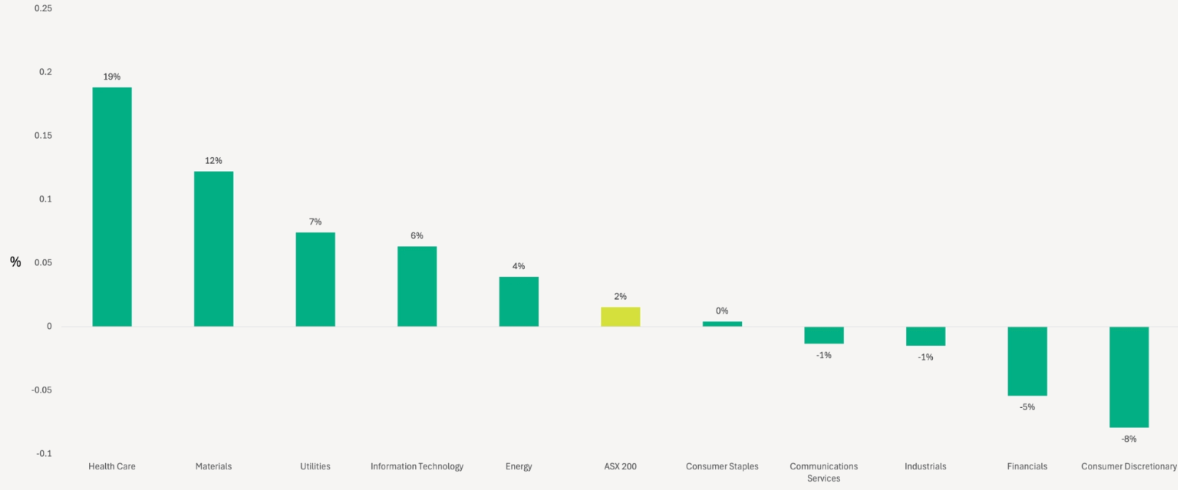
- Healthcare was a highlight for the DJW portfolio, with CSL and Cochlear both showing early turnaround progress against downgraded guidance. These results drove the sector's strongest month on record at +19%.
- The consumer market has bifurcated: staples are strong and volume-led with both supermarket majors gaining share, while discretionary weakened and mortgage applications fell ~15% post-Budget, driving weakness in the Banks.
The August 2026 reporting season presented increasingly divergent outcomes across the top companies on the ASX. While dividend growth remained strong, operating conditions varied significantly across sectors, contributing to heightened share price volatility. For shareholders, reporting season provides an important indication of the outlook for portfolio income and the key themes likely to influence returns over the year ahead.
Djerriwarrh Portfolio Manager, Brett McNeill, shares his views on the season and what it means for investors.
Company Profit Results
The ASX 200 was positive in August despite the headline FY26 earnings growth of 12% being well above trend (~5%). This growth was largely driven by the miners. Excluding Resources, EPS growth was 5%.
Few companies missed expectations, reflecting the scale of downgrades ahead of results rather than underlying strength. FY27 forecasts were cut further through August, with FY27 expected EPS growth to be +9% year-on-year.
S&P/ASX200 Index
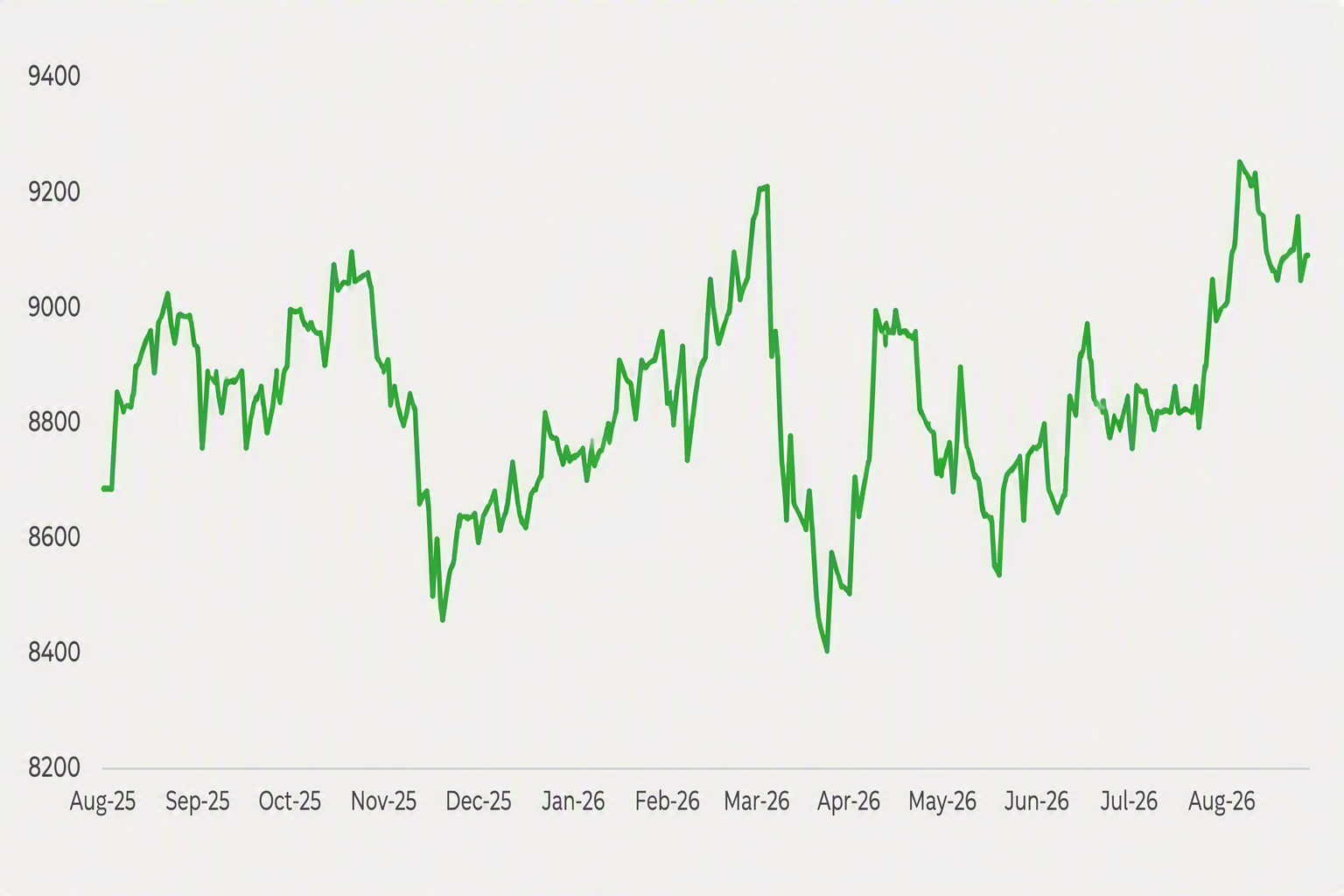
Share price reactions remained volatile, with the number of large single day moves consistent with recent reporting periods. Gains were concentrated in relief rallies among stocks that had already sold off materially this year, rather than in genuine earnings upgrades.
Sector dispersion was pronounced: Healthcare recorded its strongest month on record (+19%). In contrast, banks were down 7% and consumer discretionary was down 8%.
August 2026: Sector Performance
Dividends were solid
Dividend growth was good across the top companies on the ASX. 10 of the top 15 ASX companies that reported in August 2026 produced dividend growth, which on average was 13%. The median dividend growth for the Top 15 companies was 7%
Dividends from resources companies were significantly above expectations, led by BHP (+54%), Evolution Mining (+62%) and Rio Tinto (+36%). Fortescue was the exception, with its final dividend 23% below the pcp on a lower payout ratio, while Woodside was flat.
Dividend growth was also solid among industrial companies, with Coles, Woolworths, Telstra and Wesfarmers all increasing payouts. CSL and Woodside declared lower dividends in Australian dollar terms only, both having held or lifted in their reporting currency (USD).
August 2026 Results: Top 15 Reporting Companies Dividend Growth
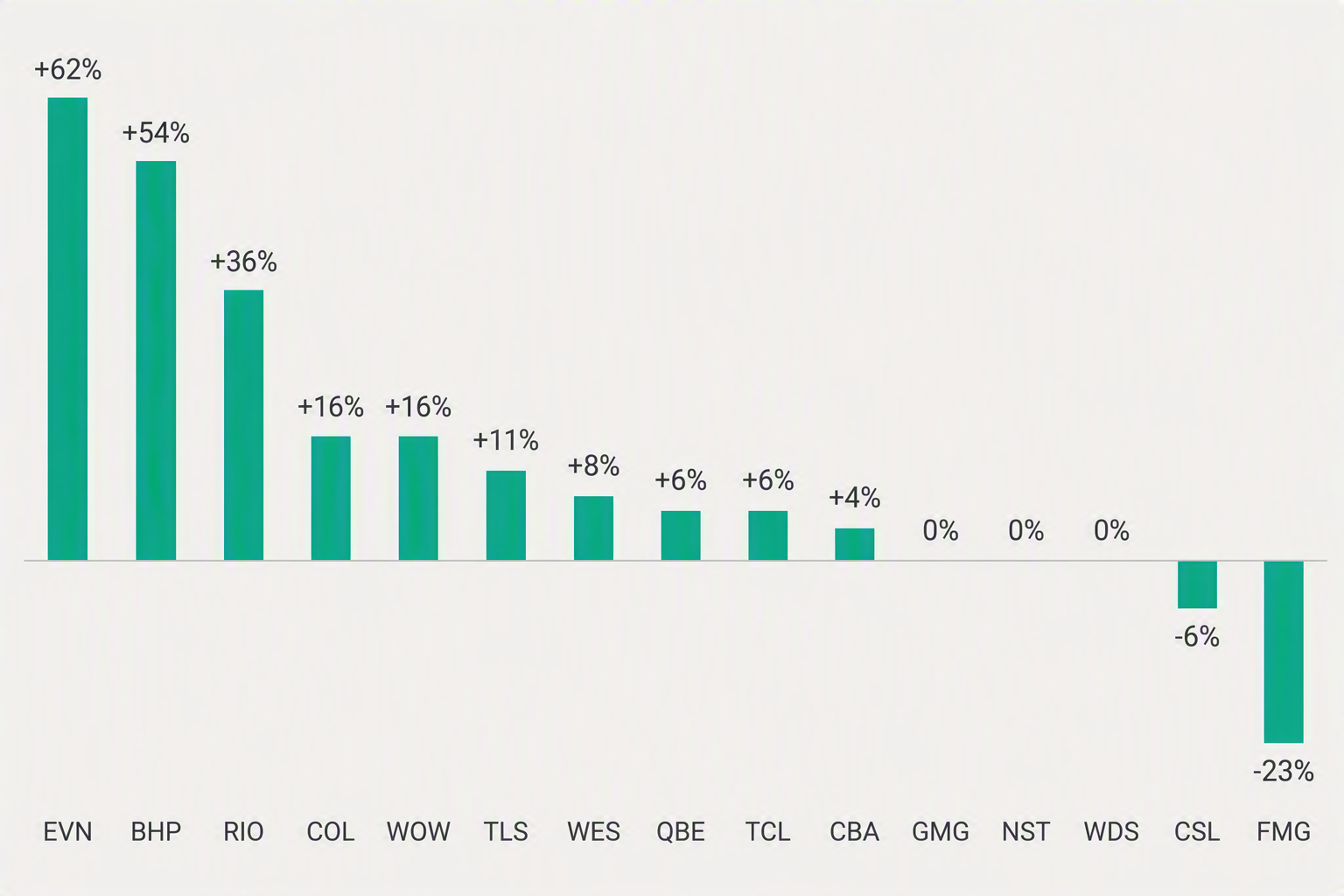
Figure 3: Dividend growth measured as total dividends declared for the six months to June 2026 versus the prior corresponding period. Excludes NAB, Westpac, ANZ, Macquarie and Aristocrat due to different reporting periods.
Takeover Bids
There were eight bids for ASX-listed companies in the past two months, including Steadfast, Cleanaway, Reliance Worldwide, Equity Trustees, Perpetual, FleetPartners, OFX and Austal’s US businesses alongside the completed Genesis-Vault merger.
Five of the targets were financial services companies and the buyer was almost always offshore private capital. Premiums have been struck well above the historical 25–30% norm: +32% for Cleanaway and Reliance, 52% for Steadfast and 108% for OFX.
Relevant to the portfolio, Equity Trustees received competing indicative proposals from TPG Global and BGH Capital within a week of each other. TPG Global's proposal represented a 42% premium to the company's closing share price prior to the approach.
Consumer Market Continues to Deteriorate
Australian consumer health weakened in the June quarter, with spending shifting out of discretionary categories into consumer staples. Whilst FY26 results were solid, FY27 trading updates pointed to softer conditions across parts of the retail sector.
For example, JB Hi-Fi Australian comparable sales fell 1.4% in July, its first negative print outside of COVID since 2014 which drove the share price sharply down on the day of results. Management noted that customers remain highly value-conscious, increasingly trading down and concentrating purchases around major promotional events.
In contrast, the major supermarkets benefited from consumers prioritising value and essential spending. Both Coles and Woolworths gained market share and delivered volume-led growth while maintaining margins, positioning them well for continued earnings growth in FY27.
The more challenging operating environment was also evident in the banking sector. Banks fell 7% in August, their largest monthly decline since June 2022, as mortgage application volumes declined following recent rate rises and Federal Budget tax changes. Application levels appear to have stabilised since with the major banks now forecasting around 2.5% - 5% housing system credit growth for FY27.
Looking Ahead
The Australian share market remains resilient despite geopolitical tensions, softening consumer demand and inflationary risks. Material dispersion in share price and sector returns is expected to continue as a result.
Market valuations remain moderately expensive, with the market forward dividend yield still below long-term average and below the 10-year Australian Government bond yield.
Dividends declared for the portfolio were above our expectations and have provided a strong start to the financial year.
For shareholders, this means the portfolio remains well positioned to continue delivering income despite a more challenging and uneven market backdrop. The current positioning of the option book also provides flexibility to generate additional income while maintaining exposure to companies we believe offer attractive long-term value.